Installation

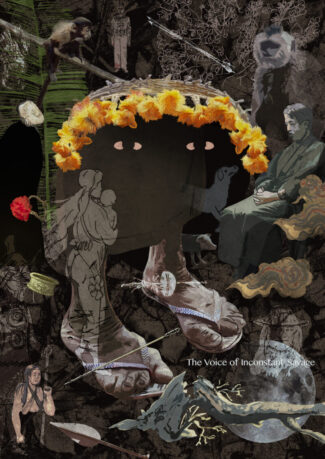
The Voice of Inconstant Savage
Commissioned for the Engawa – Japanese Contemporary Art Season programme organized by Calouste Gulbenkian Museum's Modern Art Center, The Voice of Inconstant Savage is an immersive installation that superimposes a prayer inspired by the story of a 16th-century Portuguese missionary, a chant from a Kakure-Kirishitan (hidden Christians) prayer – a religion rooted in Nagasaki Prefecture –, a chant from the Karawara spirits of the Awá indigenous people – who live in the Amazon rainforest – and a chorus of Western Gregorian chant. Morinaga questions the position of the aesthetics of inconstancy in relation to the discourse of the “savage” that modern society confronts.

Field recordings

Sombat Simla: Master Of Bamboo Mouth Organ
Simla is known in Thailand as one of the greatest living players of the khene, the ancient bamboo mouth organ particularly associated with Laos but found throughout East and Southeast Asia. His virtuosic and endlessly inventive renditions of traditional and popular songs have earned him the title ‘the god of khene’, and he is known for his innovative techniques and ability to mimic other instruments and non-musical sound, including, as a writer for the Bangkok Post describes, ‘the sound of a train journey, complete with traffic crossings and the call of barbecue chicken vendors’.

Cinema

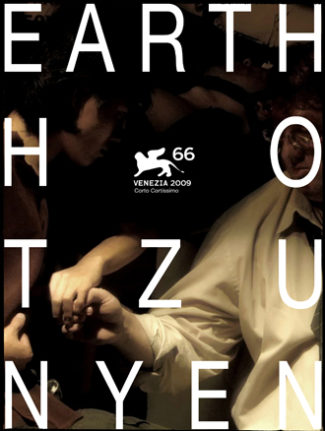
Five to Nine
5 to 9 comprises four short films that transpire across 5pm to 9am on the evening of the historic Brazil-Germany match at World Cup 2014, spanning intimate vignettes of unrequited love and final meetings. In China, a young migrant worker has saved 3,000 RMB to finally spend a night with a middle-aged prostitute, but she plans to leave the city the same night instead. In Singapore, a local teacher and his paramour from China are out for a rendezvous, submitting the fate of their future to the result of the football match. The Japanese counterpart centres on a porno-projectionist collecting debts from the punks for the poor. The film concludes in Thailand with the filming of the last scene of a sci-fi movie. Behind the camera, the director is suspicious of his leading actor and the actress who is also his wife.

Field recordings

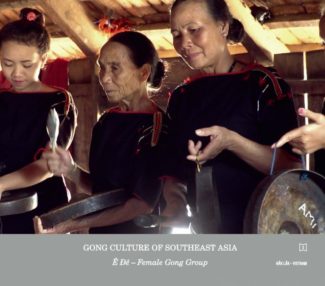
Gong Culture of Southeast Asia「Ede-Male」
The Ede groups live mainly in Tay Nguyen, the central highlands of Vietnam. Gongs are one of the most valuable instruments for Ede people. Each player strokes the back or front of the flat gong by a wooden stick aggressively, to create unique rhythmic patterns. However, for this recording, some of the tracks instead of using Gong as instruments, Bamboo are being used instead. Bamboo instruments such as Cing Kram are played by bamboo-made mallets/sticks. For Ede people, they usually practice with the Cing Kram first, and after they play the gong as the gong is more a sacred symbol and instrument. So, these bamboo instruments are used for twheir practices and they literally call it as “bamboo-gongs.”

Performing arts

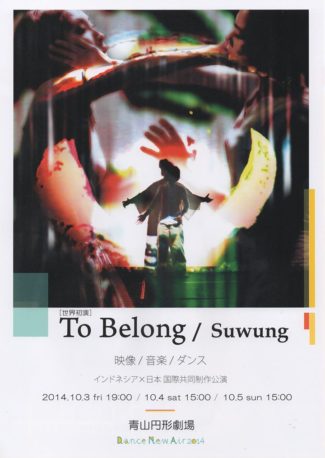
GONG ex MACHINA
A sonic theatre "Gong ex Machina" is created based on the sound composition. The event will also highlight and develop the presence of sounds as its anchor. “Gong ex Machina”, is a word play from a technical term in ancient Greece in the 5th century: Deus ex Machina, which more or less means God in or out of the machine. The term refers to the technique to present actors playing as gods on the stage of a Greek tragedy using equipment like cranes, moving up and down, or a trap door, to allow the actor coming from below the stage. Hence, Gong ex Machina, a gong in or out of the machine. The concept of the performance evolves from a reflection following an extensive research by Morinaga on the gong culture throughout South East Asian countries. Gong ex Machina also stems from the history of an encounter between music or sound cultures and the modern technology of sound recorder and player: phonograph or gramophone. Similar to other encounters between tradition and modernity—happened against the background of the industrial revolution and European colonialism in the 17th to 20th century—the encounter of gong culture with gramophone is a story of a complicated acquaintance. Apart from stories of adaptation and appropriation are also stories of distortion and manipulation. It was an encounter that changed the way we experience and understand music, in particular, or sounds in general.