Installation

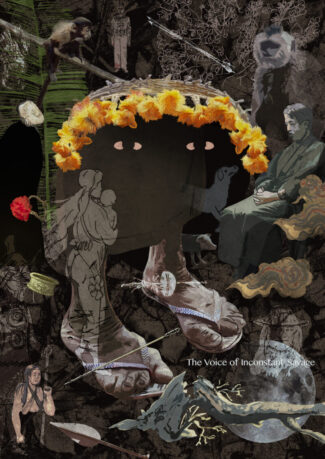
The Voice of Inconstant Savage
Commissioned for the Engawa – Japanese Contemporary Art Season programme organized by Calouste Gulbenkian Museum's Modern Art Center, The Voice of Inconstant Savage is an immersive installation that superimposes a prayer inspired by the story of a 16th-century Portuguese missionary, a chant from a Kakure-Kirishitan (hidden Christians) prayer – a religion rooted in Nagasaki Prefecture –, a chant from the Karawara spirits of the Awá indigenous people – who live in the Amazon rainforest – and a chorus of Western Gregorian chant. Morinaga questions the position of the aesthetics of inconstancy in relation to the discourse of the “savage” that modern society confronts.

Field recordings

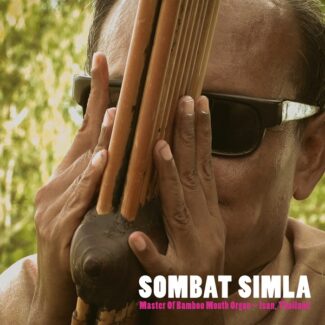
Sombat Simla: Master Of Bamboo Mouth Organ
Simla is known in Thailand as one of the greatest living players of the khene, the ancient bamboo mouth organ particularly associated with Laos but found throughout East and Southeast Asia. His virtuosic and endlessly inventive renditions of traditional and popular songs have earned him the title ‘the god of khene’, and he is known for his innovative techniques and ability to mimic other instruments and non-musical sound, including, as a writer for the Bangkok Post describes, ‘the sound of a train journey, complete with traffic crossings and the call of barbecue chicken vendors’.

Performing arts

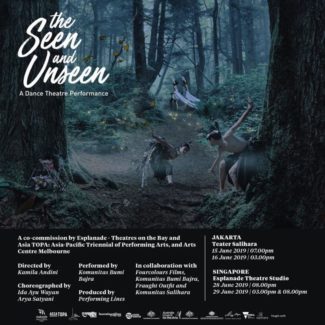
The Seen and Unseen
One day, Tantri comes to realise she will not have much more time with her bedridden twin brother Tantra, who is losing his senses one by one. Grappling with this reality, Tantri finds solace in the deepness and the darkness of night. Under a full moon, she dances, finding herself between reality and imagination, loss and hope. Tantri experiences a magical and emotional journey into womanhood that eclipses Tantra’s fading life. The Seen and Unseen (Sekala Niskala) is a new performance work, a cross-cultural collaboration between artists from Indonesia, Japan and Australia. Inspired by Indonesian filmmaker Kamila Andini’s film The Seen and Unseen, which has been described as “a truly singular film” (Cinema Scope) and “a haunting and hypnotic interpretation…rooted in Balinese arts and culture” (Variety). This dance-theatre production is a visual feast incorporating dance, live music and song, and features an electronic score, creating a blend of traditional Balinese dance movement with a contemporary approach to theatre. Driving this production is the Balinese philosophy of Sekala Niskala (“the seen and unseen”), a fundamentally dualist spiritual structure that describes what we cannot see as having equal value to what is seen in the world.

Installation

POLLINATORS
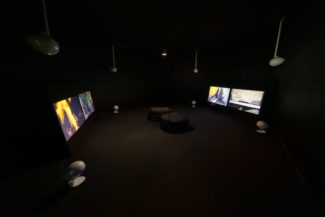
Focusing on the life of the Hmong people who live in the mountainous regions of northern Vietnam, on this occasion Morinaga presents an installation that overlays shamanistic rituals to wade off evil and misfortune with the honey-collecting activities of beekeepers. Through the symbiotic coexistence of humans, the environment, and life brought about by the respective dialogue between the shaman/spirits and beekeeper/bees, the work serves to introduce an alternative perspective to our social life and the coded systems that exist within it.

Field recordings

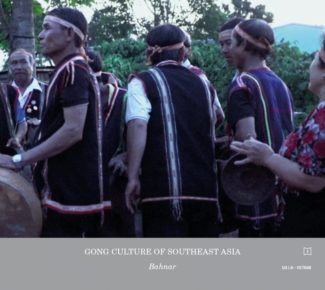
Gong Culture of Southeast Asia「Bahnar」
The Bahnar are an ethnic group in Vietnam, living from the north to the south and northeast of the Vietnamese central highlands. Bahnar speak a language in the Mon-Khmer language group. These recordings were conducted in Dak Doa, Gia Lai Province. Bahnar people use both knobbed gongs and flat gongs; knobbed gongs mostly have a rhythmic function, the flat gongs are used for melodies. Usually a gong ensemble comprises 8 or 9 gongs in total (6 flat gongs and 2 or 3 knobbed gongs), but the number of gongs can go up to 20 (10 flat gongs, 10 knobbed gongs) or even 22 (11 flat and 11 knobbed). For this recording, the musicians brought different sorts of sharpened twig as drumsticks. the biggest knobbed gong was played by twig of jackfruits. For Bahnar people, gongs - equivalent in value to several water buffaloes - are acquired through exchanges with the people from Laos, Cambodia and nowadays with Kinh groups of Vietnam. Gong music is commonly played among the Bahnar on particular occasions such as harvesting, funeral, buffalo sacrifice, wedding ceremonies, etc.