Current

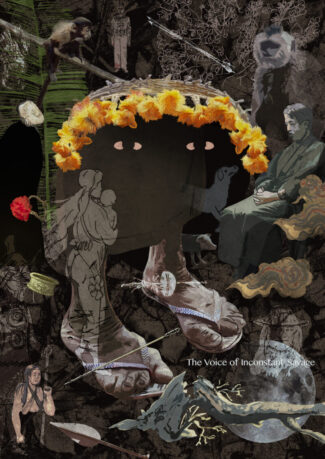
The Voice of Inconstant Savage
[Commissioned Work] This multifaceted, polyphonic and immersive sound installation by Yasuhiro Morinaga establishes a historical encounter between Portuguese culture and Japan, memories and myths that remain and coexist with other cultures of the Amazon. Commissioned for the Engawa – Japanese Contemporary Art Season programme , The Voice of Inconstant (2023) is an immersive installation that superimposes a prayer inspired by the story of a 16th-century Portuguese missionary, a chant from a Kakure-Kirishitan (hidden Christians) prayer – a religion rooted in Nagasaki Prefecture –, a chant from the Karawara spirits of the Awá indigenous people – who live in the Amazon rainforest – and a chorus of Western Gregorian chant. Morinaga questions the position of the aesthetics of inconstancy in relation to the discourse of the “savage” that modern society confronts.

Field recordings

Sombat Simla: Master Of Bamboo Mouth Organ
Simla is known in Thailand as one of the greatest living players of the khene, the ancient bamboo mouth organ particularly associated with Laos but found throughout East and Southeast Asia. His virtuosic and endlessly inventive renditions of traditional and popular songs have earned him the title ‘the god of khene’, and he is known for his innovative techniques and ability to mimic other instruments and non-musical sound, including, as a writer for the Bangkok Post describes, ‘the sound of a train journey, complete with traffic crossings and the call of barbecue chicken vendors’.

Cinema

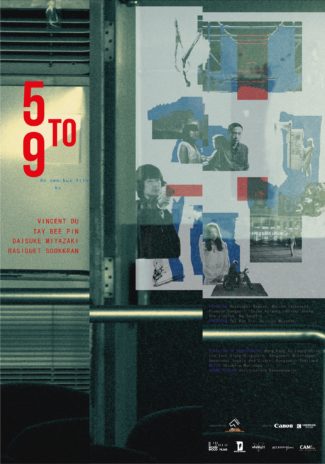
Five to Nine
5 to 9 comprises four short films that transpire across 5pm to 9am on the evening of the historic Brazil-Germany match at World Cup 2014, spanning intimate vignettes of unrequited love and final meetings. In China, a young migrant worker has saved 3,000 RMB to finally spend a night with a middle-aged prostitute, but she plans to leave the city the same night instead. In Singapore, a local teacher and his paramour from China are out for a rendezvous, submitting the fate of their future to the result of the football match. The Japanese counterpart centres on a porno-projectionist collecting debts from the punks for the poor. The film concludes in Thailand with the filming of the last scene of a sci-fi movie. Behind the camera, the director is suspicious of his leading actor and the actress who is also his wife.

Cinema

THE SCIENCE OF FICTIONS
In 1962, Siman, a solitary farmer, came to Gumuk, sandy bare land. Siman was witnessing a shooting of a fiction film about man landing on the moon. It was an unlucky day for him, Siman was caught by the army and got his tongue chopped off.Soekarno, the first president of Republic Indonesia, came to Gumuk, brought with him a Bolex 8mm camera. From the distance, he made a “the making of” man-landing-on-the-moon film. And the politics went so wrong. Under the new regime, A New Order of Soeharto, Siman was then being named as an insane person because he often moves stupidly, acting as if he is walking on the moon. In the village, Siman built a strange cubical building looking like a robotic machine that he saw in the sands. Siman designed an astronaut costume, and always uses a white helmet every time he goes out of his house. All the villagers agree that Siman is insane, but what he did is actually words and the only way he knows to show the truth. He is the only one who knew about the worlds biggest lie.

Field recordings

Exploring Gong Culture Of Southeast Asia
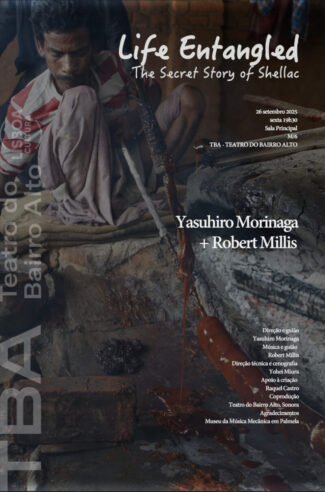
This project, Massif and Archipelago, is a field recording project initiated by Japanese sound artist Yasuhiro Morinaga, documenting traditional gong music by different Southeast Asian ethnic groups. The project aimed to examine the impact of the natural and social environment on the gong music culture of Southeast Asia. During the project, he visited over 50 different ethnic groups and made hundreds of recordings. This album presents a selection of the unique gong music from different ethnic minorities. The selected music has been divided into two broad sections: one focussing on the music from the Massif, i.e. mainland Southeast Asia (Central Highland of Vietnam and Northeast Cambodia), the other on music from the Archipelago, maritime Southeast Asia (the Luzon Islands of the Philippines, Borneo, Sulawesi, and the Flores Islands of Indonesia).