Performing arts

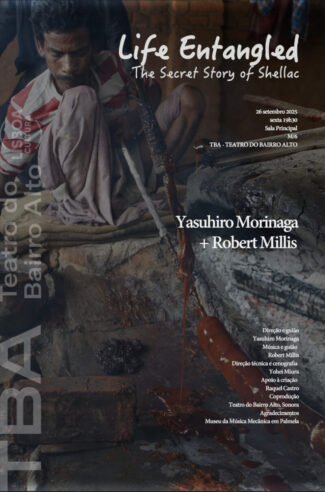
LIFE ENTANGLED
The collaborative project between Yasuhiro Morinaga and Robert Millis proposes a world in which thought and representation are not the exclusive privilege of humans, but also grants prominence to ecosystems and non-human entities. By highlighting the intricate and often invisible connections between humans and the non-human world, this work invites a broader and more inclusive perspective on life, agency, and interdependence, exploring the fundamental question of all life: what does it mean to live? At a time when climate change and natural disasters are driving the world into an unprecedented crisis, we are confronted with the limits of an attitude that views nature and ecosystems as mere exploitable resources. Life Entangled — The Secret Story of Shellac is a performative sound installation that explores the cultural relationship between objects and humans through a multidimensional narrative centered on shellac , a natural resin derived from the insect Kerria lacca , a material deeply rooted in our daily lives.

Installation

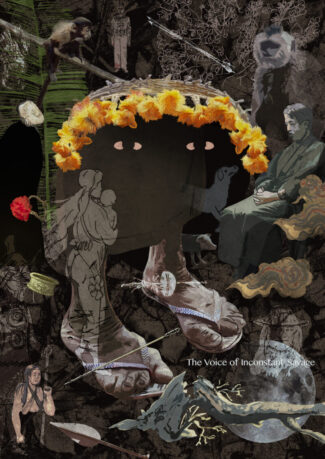
The Voice of Inconstant Savage
Commissioned for the Engawa – Japanese Contemporary Art Season programme organized by Calouste Gulbenkian Museum's Modern Art Center, The Voice of Inconstant Savage is an immersive installation that superimposes a prayer inspired by the story of a 16th-century Portuguese missionary, a chant from a Kakure-Kirishitan (hidden Christians) prayer – a religion rooted in Nagasaki Prefecture –, a chant from the Karawara spirits of the Awá indigenous people – who live in the Amazon rainforest – and a chorus of Western Gregorian chant. Morinaga questions the position of the aesthetics of inconstancy in relation to the discourse of the “savage” that modern society confronts.

Event/Workshop

Field Research for the Ears
コクヨ野外学習センターと黒鳥社による「働くことの人類学」のポッドキャストシリーズと連動したプロジェクト。森永がこれまで実践してきたフィールドレコーディングを素材に、「たたく」「ふく」「はじく」という、最も原始的な人間本来の生きていくための営み=技術をテーマにDJミックスを行っている。このDJミックスは、ここ数年アジアを中心にレコーディングしてきた民族の音楽や環境音をセレクト(アジアの音ではないものもいくつか含まれているが)し、ポストプロダクションでミキシングや電子的な加工を施しながら、リニアな音の時間を創造した。 人類学者たちは、調査地で現地語を学び、長期間地域に密着し、そこの情報をくまなく記述・記録した上で、ラボで検証・実験しながら論文や民族誌としてまとめあげていく。僕の場合は、現地の言葉もわからないし地域に密着しながら文字で記述をしていくような形も採用していない。むしろ楽器や音を軸に、その文脈や周縁を追い続けながらレコーディングしているに過ぎない。自身の目と耳を頼りに作品のゴールをゆるやかに想像しながら記録をし、素材を持ち帰ってスタジオで実験・検証しながら作品を制作していく過程は、どことなく人類学者の研究手法と似ている部分があることを以前から意識していた。

Field recordings

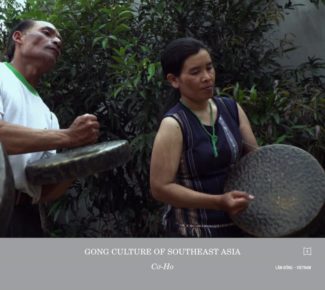
Gong Culture of Southeast Asia「Co-Ho」
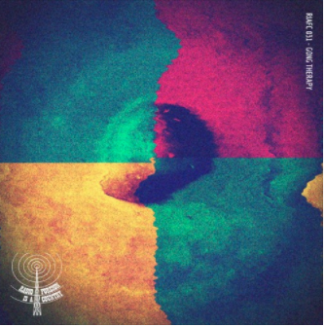
The Co-Ho people are an ethnic group living in the southern part of the central highlands of Vietnam. They speak a Mon-Khmer language. Co-Ho are animists who make a division between two types of supernatural spirits: the first type, with human characteristics, is called "Yang" - these are gods which are worshipped during ceremonies and important rituals to prevent from bac luck, which is represented by the second type of spirits, called "Cha" = devils. The music of Co-Ho people serves different rituals and thus there are different styles of gong music, played on both flat and knobbed gongs. Usually an ensemble consists of six gongs. On this recording, the number of gongs ranges from 2 to 6. On the occasions where music is performed in duo(such as first track), a small ritual is conducted as a means to show respect to the ancestors. This particular track is quite rare and consists of improvisation and call&response. If one of the gong players is unable to follow the other one, the player who fails to follow needs to drink rice wine from the vase. For this album, two locations for 2 groups in total were visited. One of the groups had forgotten how to play gong music: they had a new member and they had not practiced for a while, being busy with their daily lives (track 6&7). The other group played gong music well: this ensemble was constituted of members of the same family, who often meet and play together (track1-5).